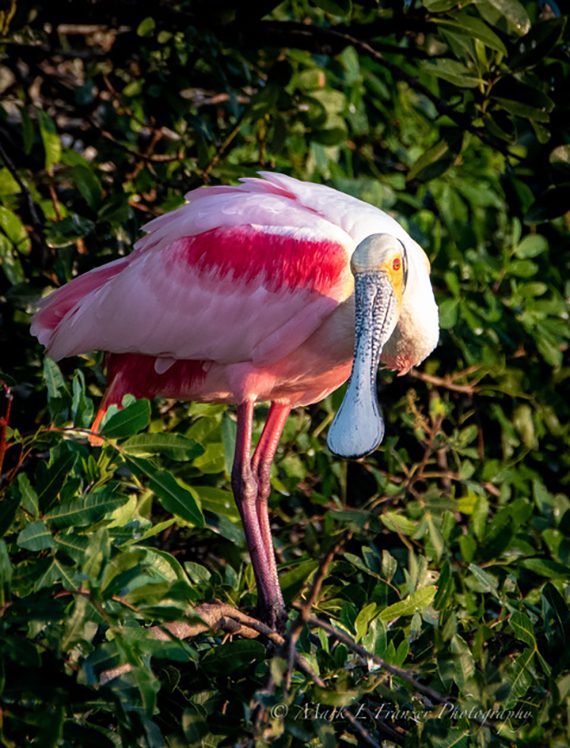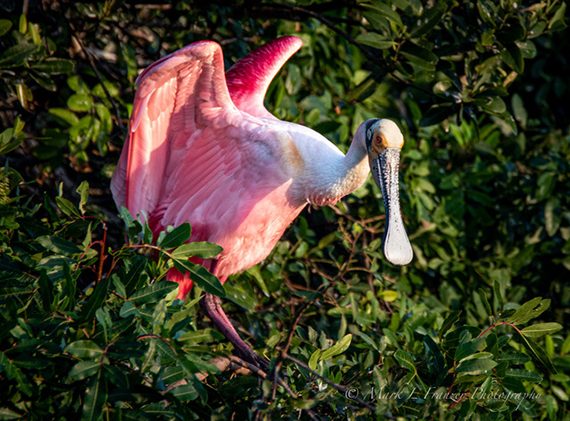

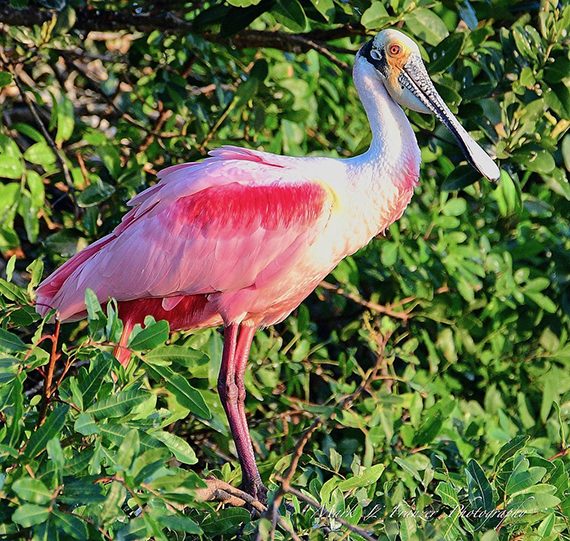
Few Florida birds are as striking as the Roseate Spoonbill. Known for its brilliant pink feathers and distinctive spoon-shaped bill, this elegant wading bird is often mistaken for a flamingo. Its vibrant coloration comes from carotenoid pigments found in the shrimp, small crustaceans, and other aquatic organisms it consumes. Much like flamingos, spoonbills accumulate these pigments in their feathers over time. Birds with access to abundant, high-quality food sources often display the most vivid pink plumage, making their color a reflection of both diet and habitat quality.
The spoonbill’s most remarkable feature is its unique bill. Unlike herons and egrets that rely primarily on sight, Roseate Spoonbills feed by sweeping their partially opened bills from side to side through shallow water. Thousands of sensitive nerve endings inside the bill allow them to detect tiny fish, shrimp, crabs, and aquatic insects by touch. When prey is encountered, the bill snaps shut almost instantly. This specialized feeding technique enables spoonbills to forage effectively even in murky water where visibility is poor.
Roseate Spoonbills are also important indicators of wetland health. Their feeding and nesting success depend on the delicate balance of water levels, salinity, and prey availability within coastal ecosystems. Healthy wetlands support abundant populations of the small aquatic creatures that spoonbills depend upon for food—and ultimately, for their signature pink color. When nesting success declines or birds are forced to relocate, it can signal changes in water quality, habitat conditions, or disruptions to natural water flow. Because of this, scientists often monitor spoonbill populations as a measure of the overall health of Florida’s estuaries, mangrove forests, and coastal marshes.
Once threatened by plume hunting and habitat loss, Roseate Spoonbills have made a remarkable recovery through conservation efforts. Today, they remain one of Florida’s most recognizable birds and a colorful reminder of the importance of protecting Florida’s wetlands for future generations.