

BROWN PELICANS

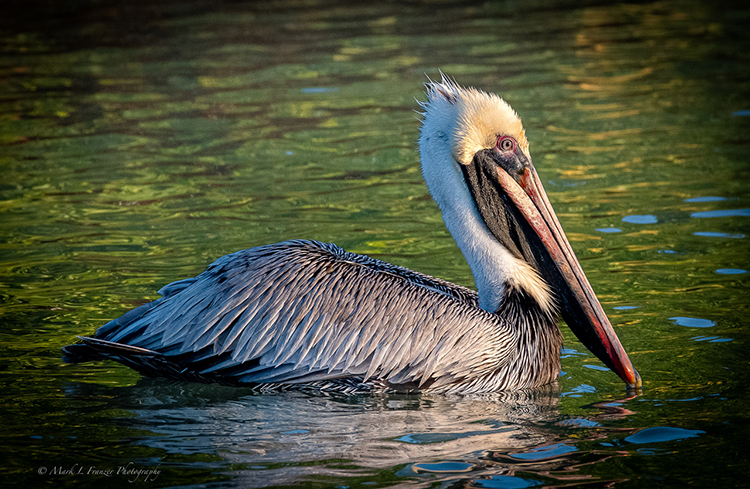
Brown pelicans are large, stocky seabirds with slender necks and extremely long bills. A flexible throat pouch allows them to catch fish. Their wings are long and broad, often appearing bowed as they glide. Adults are gray-brown with yellow heads and white necks. During breeding season, the neck becomes a deep reddish-brown. Immature birds are gray-brown overall, including the head and neck, with a pale, whitish breast and belly.
Brown pelicans feed by plunging headfirst into the water, stunning small fish with their heavy bodies and scooping them up in their expandable pouches. When not feeding, they gather near fishing docks, jetties, beaches, and coastal waters, or patrol the shoreline. In flight, they often travel in lines, gliding on broad wings and riding updrafts along waves or cliffs, with slow, powerful wingbeats.

Brown pelicans live primarily along southern and western coastal areas and are rarely found far inland, except at California’s Salton Sea. In Florida, they are common year-round residents along both the Atlantic and Gulf coasts. They inhabit bays, estuaries, lagoons, mangroves, coastal islands, and nearshore waters, often roosting on sandbars, piers, and docks. In Florida, they nest in colonies on protected barrier islands and mangrove islands that are free from land predators.
In the wild, brown pelicans typically live 15 to 25 years, though some individuals have been known to survive even longer under favorable conditions.